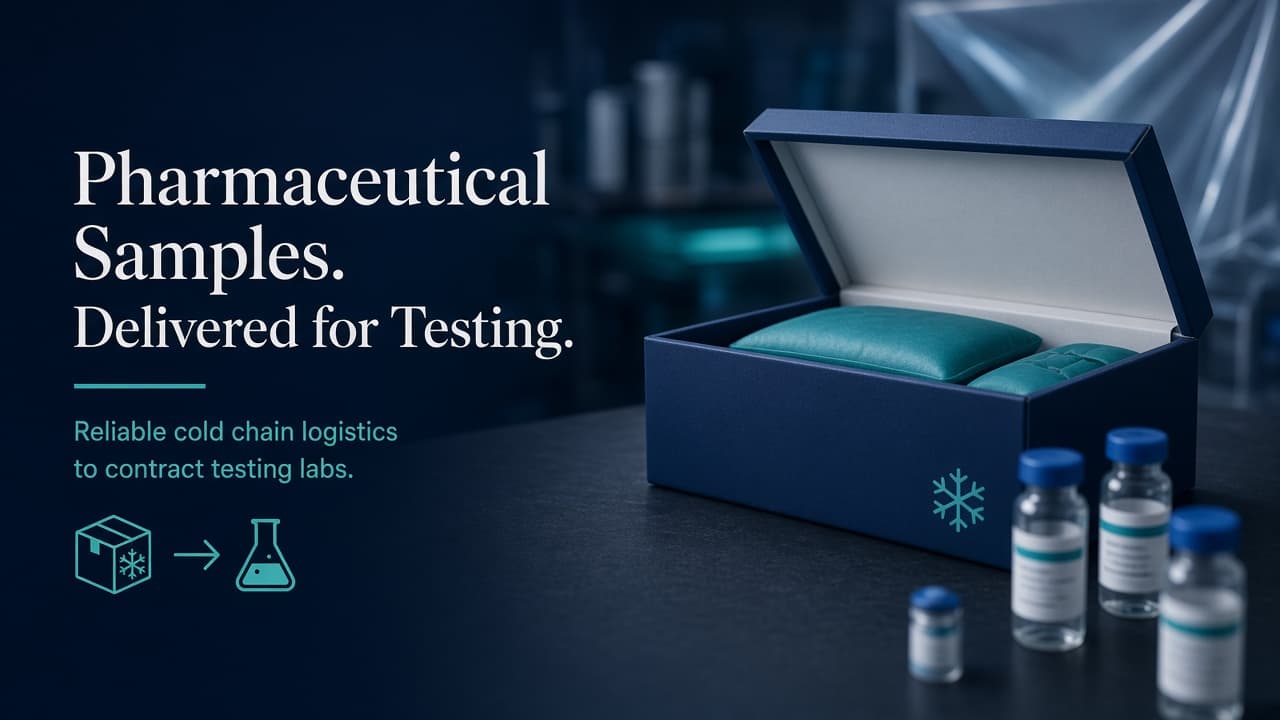
Process & Procurement · 6 min read
How to Ship Samples to a Contract Testing Lab Without Invalidating the Test
A practical shipping and chain-of-custody guide for pharmacies sending samples for USP testing—packaging, temperature control, timing, labeling, and how to align with lab accessioning requirements.
Updated August 26, 2026
Many “lab failures” started in a cardboard box
Before you blame a contract testing laboratory for a confusing result, audit the journey from your bench to their accessioning desk. Temperature abuse, missing labels, Friday arrivals, and the wrong container type invalidate more studies than most purchasing teams expect.
This guide is a practical checklist for compounding and 503B teams shipping samples for USP microbiology and chemistry work.
Align with the lab before you pack
Never ship on assumptions. Confirm in writing:
- Exact receiving address / suite (network brands have many docks)
- Required container type (especially for endotoxin—see USP <85>)
- Minimum volume / unit count
- Temperature requirement (ambient, cold, frozen, controlled room temperature)
- Accepted carriers and delivery days
- Cutoff time for same-day accessioning
- Required paperwork (submission form, PO, SDS if needed)
Ask for the lab’s sample submission SOP or one-pager and file it in your vendor pack.
Label like an auditor is watching
Every unit should carry:
- Product / material name
- Lot or batch ID
- Strength / concentration if relevant
- Manufacture or compound date
- Storage condition
- Test requested (e.g., USP <71>, assay)
- Your organization name and contact
Unlabeled “vial A / vial B” systems fail under investigation pressure.
Packaging principles that protect data integrity
Temperature
- Use qualified shippers for cold chain
- Add enough refrigerant for worst-case transit + weekend delay if applicable
- Do not place freeze packs in direct contact with samples that must not freeze unless intended
Protection
- Cushion against breakage
- Secondary containment for liquids
- Light protection for photosensitive actives
Documentation
- Put submission forms in a waterproof pouch
- Include a packing list matching labeled units
Timing: the quiet killer
- Avoid Friday shipments unless the lab confirms Saturday receiving
- Account for holidays
- Do not assume overnight always arrives before incubator cutoff
- For sterility and EM plates, transit time can be part of the scientific story—ask what the lab allows
If your clinical urgency forces a risky ship window, document the deviation risk with QA—not only with shipping.
Chain of custody and retains
- Photograph packed shippers for high-stakes lots
- Keep retains when the study is release-critical
- Record who packed, who shipped, tracking number, and expected receipt
- Confirm receipt by portal or email the same day
Special cases
Endotoxin
Depyrogenated or lab-specified containers matter. Kitchen glassware stories end badly.
Environmental monitoring plates
Follow lab hold-time and orientation rules. Overgrown transit is not a cleanroom verdict.
Controlled substances
Confirm DEA receiving capabilities and documentation before you ship.
Hazardous / cytotoxic
Share handling needs early so accessioning is not surprised.
How shipping quality should affect vendor scoring
When you evaluate quotes, score labs on:
- Clarity of submission instructions
- Accessioning confirmation speed
- Willingness to reject compromised samples (a feature, not a bug)
- Geographic logistics fit for your carrier reality
A slightly farther lab with excellent receiving discipline can beat a closer lab that loses Fridays.
A one-page pre-ship checklist
- Test brief and PO confirmed
- Receiving site confirmed
- Container type correct
- Labels complete
- Temperature plan matches requirement
- Tracking activated
- Lab knows ETA
- Retains secured
Bottom line
Sample shipping is part of the method. Treat pack-out as a controlled process and you will waste fewer lots, argue about fewer OOS results, and build better lab partnerships.
Find CTLs with clear submission practices on LabCompare Rx, then make their receiving instructions part of your SOPs.
Keep reading
 Process & Procurement
6 min read
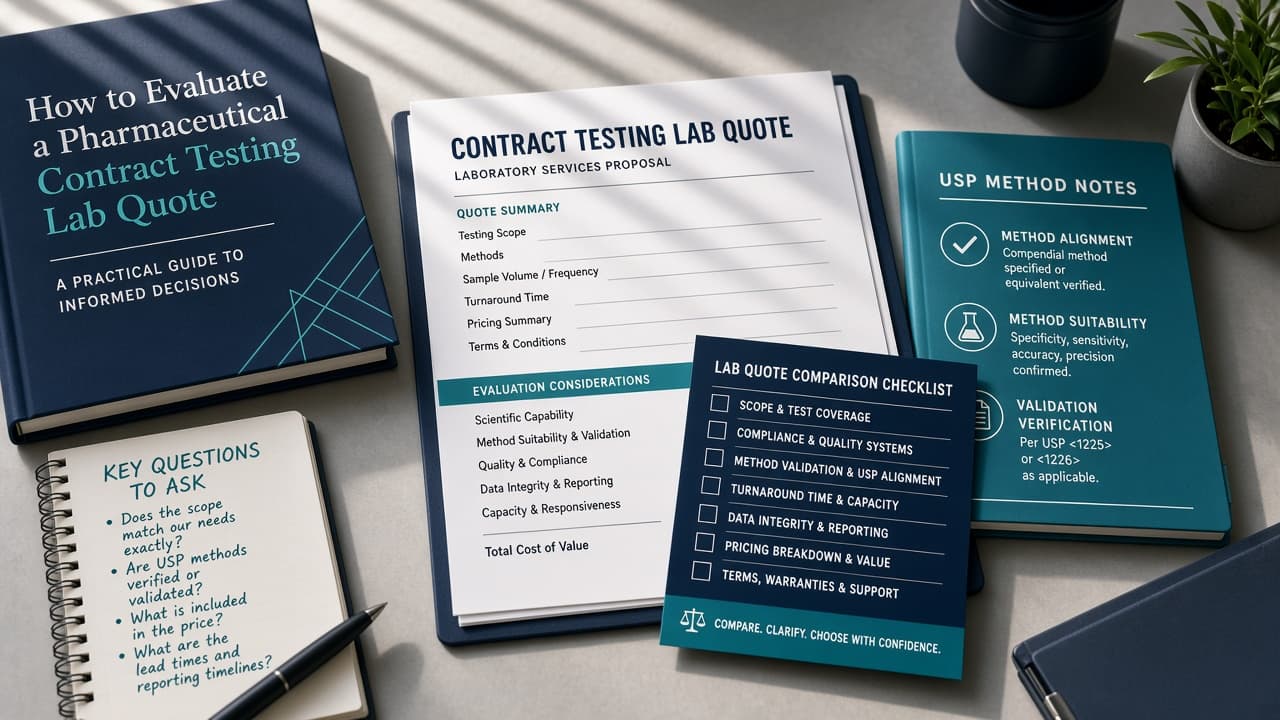
How to Evaluate a Pharmaceutical Contract Testing Quote (Without Getting Burned)
A step-by-step process for pharmacies and QA teams to request, compare, and approve contract testing lab quotes—covering scope gaps, TAT reality, accreditation fit, hidden fees, and quality-agreement must-haves.
Read guide →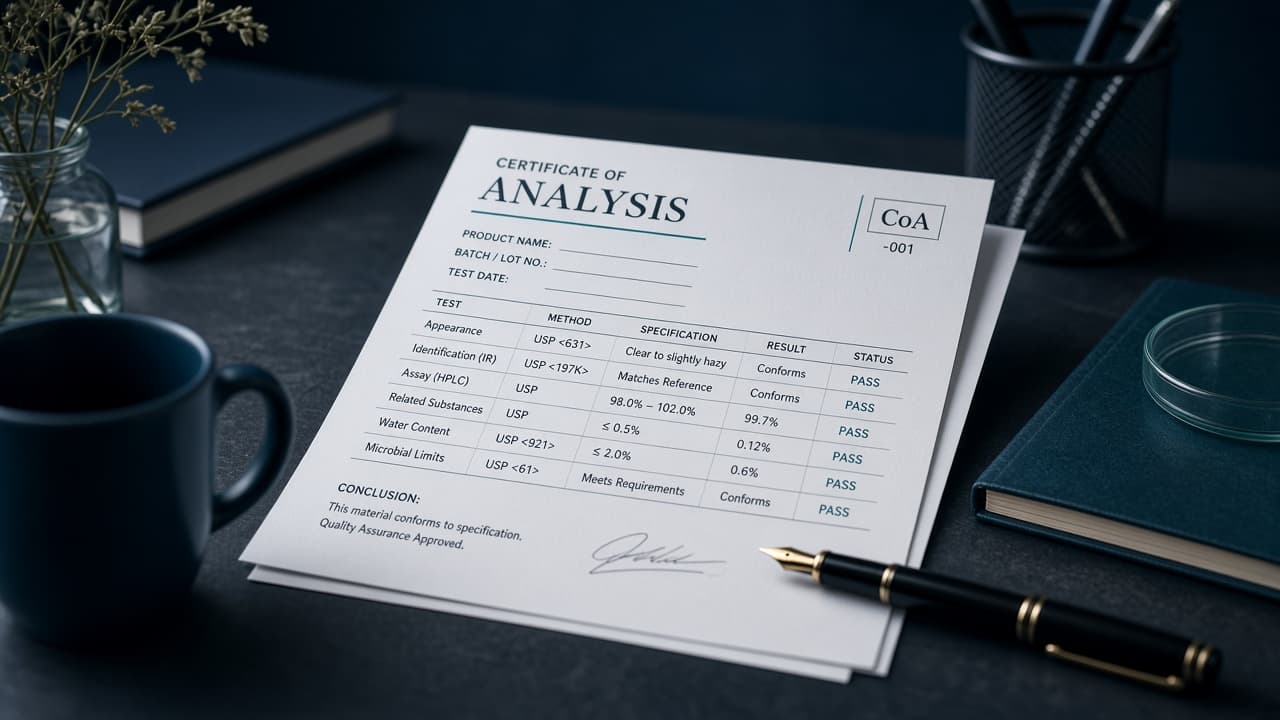 Process & Procurement
6 min read
How to Read a Contract Lab Certificate of Analysis (Without Missing the Fine Print)
A readable walkthrough of pharmaceutical CoAs from contract testing labs—what each section means, which fields matter for release decisions, red flags, and how pharmacies should file and trend reports.
Read guide → Stability & BUD
6 min read
Stability Testing and Beyond-Use Dating: How to Use a Contract Lab Wisely
Educational overview of stability testing support for compounding and outsourcing facilities—study design basics, time-point assays, microbiology overlaps, and how to brief a contract laboratory for BUD-related data.
Read guide →