Facilities & Utilities · 6 min read
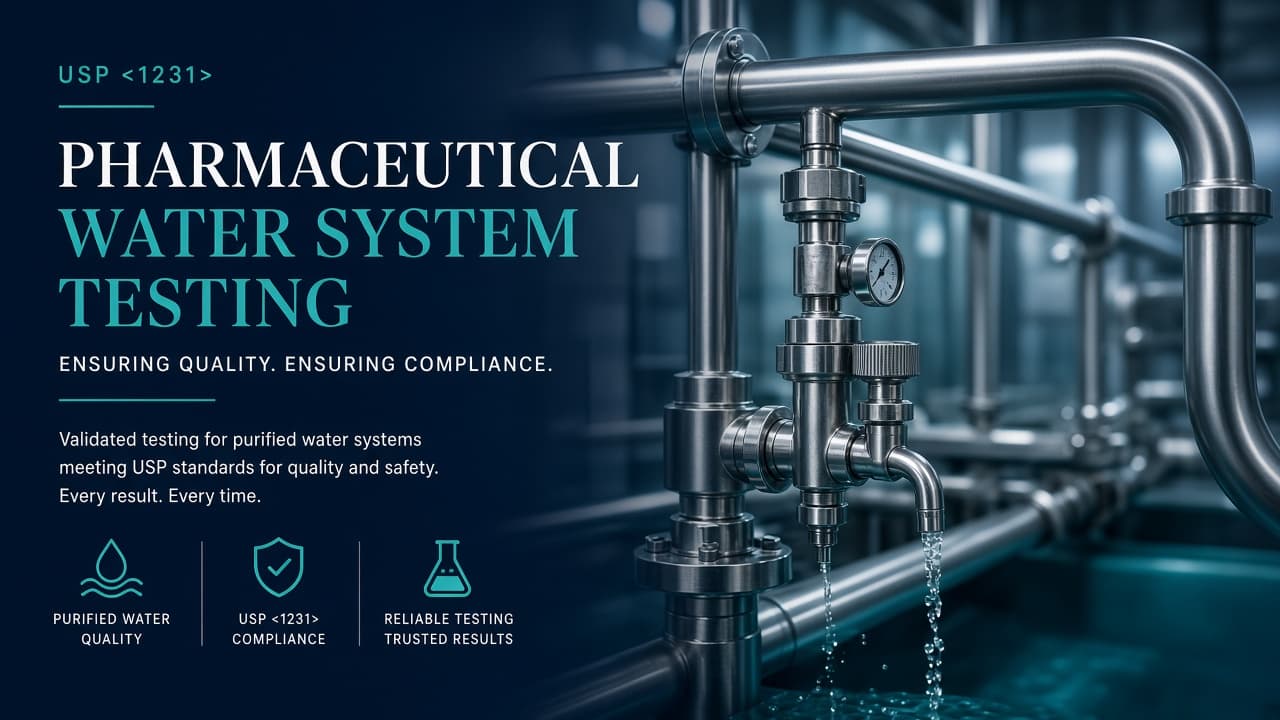
Pharmaceutical Water Testing for Compounding Facilities: A Practical Outsourcing Guide
How compounding and 503B teams should approach pharmaceutical water testing—conductivity, TOC, endotoxin, bioburden, sampling discipline, and choosing a contract lab for USP water attributes.
Updated November 3, 2026
Water is a raw material you manufacture every day
In sterile and many nonsterile operations, pharmaceutical water is not a utility in the casual sense—it is a critical material produced by your system. When conductivity drifts, TOC rises, endotoxin appears, or bioburden trends upward, finished preparations inherit the problem.
Some attributes are monitored online. Others are sampled and sent to contract testing laboratories. This guide focuses on how pharmacy and facility teams outsource water testing intelligently.
Know which water you actually use
Common types in compounding environments include purified water and, for higher-risk sterile operations, water meeting injectable expectations as defined by your SOPs and applicable USP water monographs. Your quality system should name:
- Water type(s) used at each point of use
- Online vs offline tests
- Sampling map and frequencies
- Alert/action concepts
- Response procedures
Do not ask a lab for “water testing” without specifying the monograph attributes and sample points.
Typical outsourced water tests
Depending on your program:
- Conductivity (when offline confirmation is needed)
- TOC
- Bacterial endotoxins (especially where required for the water type / use)
- Microbial enumeration / bioburden
- Organism identification when action levels are exceeded
- Occasionally other chemical attributes based on risk or investigation
Online instruments reduce—but do not eliminate—the need for a coherent sampling and verification strategy.
Sampling discipline beats laboratory magic
Most disputed water results are sampling stories:
- Improper flush volume before sample collection
- Contaminated valves or poor aseptic technique at the point of use
- Wrong container type (especially for endotoxin)
- Excessive hold time before analysis
- Mislabeled sample points
Write sampling SOPs that match lab accessioning requirements. Ask the CTL for container kits and hold-time limits in writing.
Designing a water testing package for quotes
Your brief should include:
- Water type and governing specifications
- Sample point list (or representative points for the bid)
- Tests per point
- Frequency assumption for pricing (weekly / monthly / investigation)
- ID expectations after exceedances
- TAT and weekend receiving needs
- Whether you need trendable electronic data exports
Labs can price a one-off investigation sample very differently from a standing monthly program—say which you want.
Choosing a lab for water work
Look for:
- Experience with pharmaceutical water systems (not only municipal drinking water panels)
- Endotoxin capability if your water type requires it (USP <85> guide)
- Microbiology competence for bioburden and ID
- Clear chain-of-custody and invalid-sample rules
- ISO/IEC 17025 scope fit for the methods you need
Use LabCompare Rx search to shortlist, then confirm performing site logistics so samples do not age in transit.
Trending across online and offline data
The power of water quality programs is correlation:
- Does offline TOC confirm online spikes?
- Do endotoxin events follow maintenance?
- Do bioburden recoveries cluster at one point of use?
Require your CTL reports to use stable sample-point IDs that match your P&ID map. Rename points every quarter and your trend history dies.
Investigations: keep chemistry and microbiology in one war room
When water fails:
- Preserve retains if available
- Pull maintenance / sanitization logs
- Review sampling technique videos or witness sampling if disputes persist
- Ask the lab whether the run was analytically valid before you rebuild the loop
A competent CTL will help separate lab invalids from true system signals.
Cost control without cutting signals
Smart savings:
- Risk-based frequencies after the system is historically stable
- Focused ID (not everything needs full speciation every time)
- Bundled program pricing vs random one-offs
Unsafe savings:
- Skipping endotoxin where scientifically required
- Extending hold times to wait for cheaper shipping
- Sampling only the “cleanest” point of use
Bottom line
Pharmaceutical water testing protects every preparation that touches the loop. Outsource to labs that understand USP water attributes and accessioning realities, and keep sampling ownership inside your facility SOPs.
Build a standing water package brief, then request comparable quotes from qualified CTLs through LabCompare Rx.
Keep reading
 Stability & BUD
6 min read
Stability Testing and Beyond-Use Dating: How to Use a Contract Lab Wisely
Educational overview of stability testing support for compounding and outsourcing facilities—study design basics, time-point assays, microbiology overlaps, and how to brief a contract laboratory for BUD-related data.
Read guide →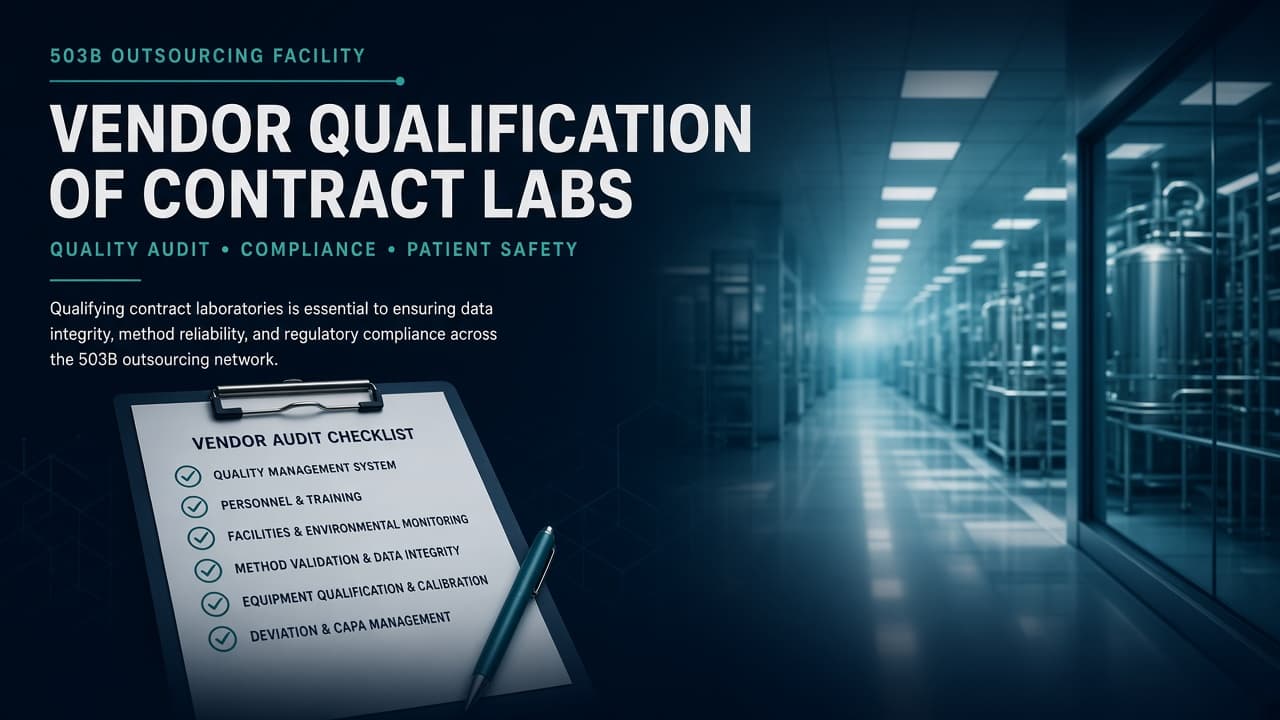 503B & Quality Systems
6 min read
503B Outsourcing Facilities: How to Qualify Contract Testing Laboratories
A process guide for 503B quality teams qualifying pharmaceutical CTLs—risk ranking tests, audit questions, quality agreements, data integrity expectations, and ongoing vendor performance management.
Read guide → Analytical Chemistry
6 min read
Potency and Assay Testing for Compounding Pharmacies: How to Outsource with Confidence
Educational guide to potency/assay testing for compounded preparations—method selection, reference standards, acceptance criteria, stability overlaps, and how to evaluate analytical contract laboratories.
Read guide →